About me
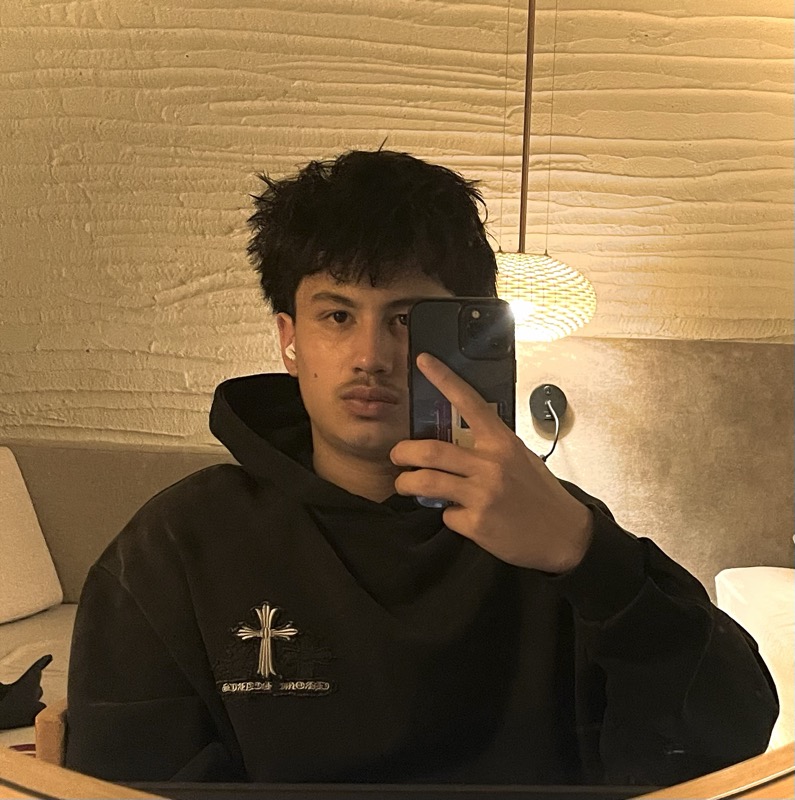
I'm a self-taught builder, founder of three consumer apps, and a high schooler in the French countryside. I'm 17.
I've been making and selling things since I was 8, back when it was ebooks on subjects I knew nothing about. I wanted to create and I wanted to sell,
In my late 14 I built Refeel, an AI breakup companion for women. It reached 350,000 downloads in under six months. The first day it made real money I cleared $700, and that was the day I stopped planning to become a surgeon. I brought on a co-founder and we scaled it to $30K MRR. Then he took the money, disappeared, and blocked me everywhere. I couldn't pay the creators, most of them left, and everything I'd reinvested went with him. I was 14. It's still the most useful thing that's ever happened to me.
After that came Wandr, a Gen Z travel app scanning global airlines for cheap flights & hotels, and SingMax, built in a few days on the opposite thesis: start in a niche small enough to actually own before trying to scale. All of it happened inside about a year.
I actually love reading ( I prob read around 15 articles a day). Most of what I know came from reading rather than from school. I think learning how to learn is the first skill worth having and almost nobody is taught it, and I also belive that whatever you do you should optimize for learning over money.
I'm working on longevity and age reversal. My grandfather died before 60. My uncle survived cancer and was never the same. My mother has worked 12-hour shifts for the last decade and still doesn't stop when she gets home. My Mission is to help 1.66 billion people (roughly 20% of the world), live longer and stay healthy while they do it. Healthspan, not just lifespan.
I think aging is a disease and I think biotech moves far too slowly to treat it. It takes around 15 years and over a billion dollars to bring one drug to market. Those numbers get defended as the price of safety. I think they're also a body count.
I love sport and I love pushing past where I think my limit is. A month ago a friend and I ran a full marathon with no training at all, just because we saw it was happening nearby. I approach building the same way: you don't find out what you're capable of by staying inside what you already know you can do.
I'm interested in longevity, biotech regulation, consumer products, distribution, and philosophy/ thinking & solving difficult problems.
I think that your environment its what matters most. I live in a village of 2,000 people. Nobody here is building anything, and nobody wants to. France doesn't celebrate success, it looks at it sideways, and in the countryside that's 10 times worse. If you say that you want to build something big or talk about your dreams people look at you like you're crazy or just child which never grew up. I actually feel like there's nobody who gets it here.
I used to think I could just work harder and my location wouldn't matter. That was wrong, at least not if you wanna build something so big that actually could impact a billions lives. Where you are, decides how fast you move, what feels normal to risk, and what you even think is possible.
I believe the only things worth building are things so difficult and impossible people can't even imagine it. If nobody thinks you're crazy, the problem is too small.
Competition is for losers.Peter Thiel
What I believe
- Aging is a disease. Even if it's not classified as one, which is exactly why there's no direct path to treat it.
- Big pharmaceutical companies move way too slow.
- Longevity is the largest market in the world and it doesn't technically exist, because the thing it treats isn't legally a disease.
- Living longer is pointless if you're not living well & happy.
- Competition means you're in the wrong place.
- The only things worth building are the ones people tell you are impossible.
- Learn how to learn before anything else.
- Optimize for learning over money. Whatever you're doing, make sure you're getting smarter from it.
- Your network is your net worth.
- Money doesn't make you happy. It just gives you the reach to help people, and that's where the feeling actually comes from.
- The best way to be happy is to make the people around you happy.
- Never trust anyone so much that it blinds you.
Thoughts about money
Honestly, I still don't know if I love money or hate it.
Since I was a kid I've been building things to make money. The first real day Refeel made money I made $700 in one day and I was so fucking happy. But once you taste it, you don't wanna stop. You always want more, and chasing it pulled me away from my family and the people closest to me. Money separated me from them more than anything else did.
At the same time, I don't think you can reject money. Money changes lives. It gives people hope. Whatever you want to do, whether that's helping people or backing a cause you believe in, you'll have more impact with money than without it. So you need it first. But the money itself doesn't matter, only what you do with it.
For a long time what drove me was my mom. She works 12-hour shifts and then keeps working when she gets home, and we barely see her. Since I was little I wanted to make enough that she could finally rest.
What I think about most though is how money traps people. It's like an invisible cage. Most people I know have way more potential than they'll ever use, and it's not because they aren't smart or capable. It's because a guaranteed salary feels safer than trying something real. The fixed paycheck becomes a fence, and after a few years they stop even looking over it. That's the saddest thing I see around me. Not people failing, but people never trying because leaving the cage feels too risky.
It took me a while, but I don't work for money anymore. I build because I love building, and the money follows. What I care about now is helping people suffer less and live longer. And not just people who can afford it. If longevity ends up being something only the rich get, we've just built a new class system where money decides how long you live. I want it open to everyone, rich or poor, no matter where you're born, so everyone gets the same shot at a longer and happier life. I wanna help humanity keep going, and money is only worth anything if it gets me closer to that.
My biggest fear
I'm not scared of failing. I'm scared of longevity working and making the world worse. It's the same shape of risk as AI, maybe bigger, and almost nobody talks about it that way because living longer sounds obviously good.
Here's what I keep coming back to. Extending life doesn't fix anything underneath it. If people are miserable, starving, or stuck, all you've done is extend that. Living to 200 isn't a gift if the 200 years are bad ones.
Then there's the gap it would create. If the first version is expensive, rich people get decades that poor people don't. They'd have more time to build wealth, more time to pass it down, generations that just keep compounding while everyone else still dies of things we already know how to treat. The gap between the top and everyone else would get wider than it's ever been, and it would stay that way. That's the opposite of what I want. The point of this is to bring people closer together, not to hand the rich a head start they never lose. I'm not naive, I know you'll never make everyone equal. But there's a difference between inequality people can live with and inequality where one group literally lives longer than another. Push it that far and people burn the whole thing down. That's what the French Revolution was. It has to be built cheap and available to everyone from the start, or it shouldn't be built at all.
And then there's the part that actually keeps me up. What happens to this in a dictatorship or a country where people already have no way out? Right now a bad system ends when the people running it die. If it doesn't end, you get regimes that last centuries and people working their whole lives for nothing, except now their whole life is 200 years instead of 60. Longevity in the wrong government isn't a gift, it's a life sentence.
There's also the race. If one country gets there first, the rest won't sit and watch. You'd see the same scramble you see with AI right now, except the thing being raced for is who gets to live.
So I do ask myself whether this should be built at all. I think yes, because people are dying and we can stop it. But it has to be built by people who take these questions seriously, not people who figure it out afterward. When it's too late.
Friends and family
My mother is the exception to everything I'd say about family. She's an engineer, works 12-hour shifts, then comes home and keeps working. She's barely slept properly in ten years. When my grandfather died I watched her face and swore I'd never see her like that again, and that's a big part of why I work on what I work on. She taught me that no matter how much money you end up with, you take care of people. Every important thing I believe traces back to her somehow.
Beyond her, I'm not that attached. My parents are strict and expected a lot from me, which I think was good for me, but I never felt especially close to most of my family. I don't really buy "blood is thicker than water." I feel about as connected to people I choose as to people I was assigned, and I'd rather push outward into the unknown than stay inside the circle I was born into.
Making friends came hard when I was younger. I wasn't social at all and connecting with people took real effort. Now I make friends easily. They come and go depending on where life puts everyone. Proximity and shared interests start friendships, and proximity and interests change. Best friends turn into old friends you barely text. New people show up and become the closest ones you have. Some disappear for years and come back like nothing happened. I still care about all of them, whether we talk or not.
People who inspired me
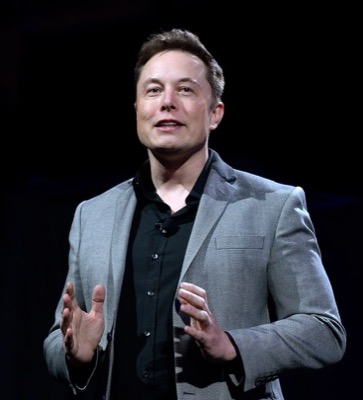
Elon Musk
SpaceX, Tesla
Musk is where I learned that execution is the whole game. Ideas are cheap and everyone has them. The difference is whether you actually ship, and how relentlessly. His work ethic and the culture he builds around it set a standard I hold myself to. He also made it obvious that the only problems worth spending decades on are the ones that change something structural.
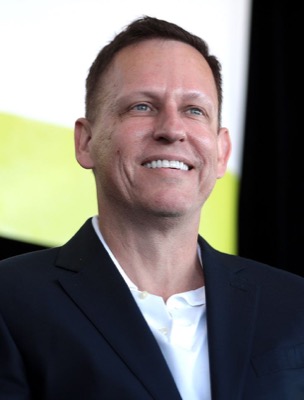
Peter Thiel
PayPal, Palantir, Founders Fund
Zero to One changed how I pick what to work on. Competition is for losers. Real value comes from building something so different it has no competitor, and going from zero to one means creating what didn't exist rather than iterating on what does. Thiel is also the clearest voice on stagnation: we've innovated in software while the physical world, biotech especially, has barely moved since the 1970s, largely because of regulation. That's most of why I work on longevity instead of building another app.

Lucy Guo
Scale AI, Passes
Your network is your net worth. Guo is why I treat proximity as strategy rather than luck. The people around you set your ceiling, and the fastest way to change your trajectory is to change who's in the room. That's the entire reason I'm moving to San Francisco.
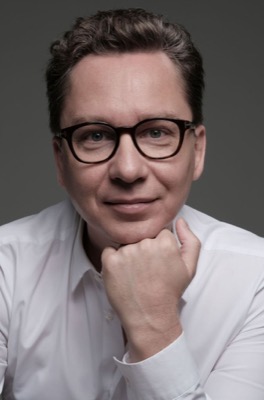
Sergey Young
Longevity Vision Fund
Young is the reason I got into longevity and age reversal at all. He made it feel like a field I could work in rather than admire from the outside, and he's blunt about the structural problem: aging isn't recognized as a disease, so every longevity therapy has to be developed as a side effect of treating something else. He's also why I think about healthspan rather than just lifespan.
More about me
I care deeply about very little.
I'm committed to just a few people and a few interests. Everything else, I keep away.
I single-task.
I'm into only one thing at a time, focusing on it to completion, whether that takes hours, months, or even years. I've always been like this, even as a little kid.